Monday, October 20, 2014

Black Infant Mortality Rates Down, but Racial Gap Persists

During August of 2014, Oliver Ortega published an article on the Boston Globe about Black infant death rates. According to the publication, the persistent gap in infant mortality rates between black and white infants narrowed significantly in Boston. However, despite the great changes, the gap still remains. In 2000, data showed that black infants were five times more likely to die compared to white infants with 13.6 black infant deaths opposing 2.8 white infant deaths out of 1,000 live births. In 2012, the gap narrowed with 6.5 black infant deaths compared to 3 white infant deaths out of 1,000 live births.

These changes were explained through a new approach, started in 2012, where city health department nurses would help mothers during pregnancy and after. This approach was meant to help future mothers (especially black mothers) maintain healthy lifestyles during their first pregnancy and between pregnancies. The nurses would check up on the children until they reached age five. Also, it was meant to help future mothers deal with social stressors including housing, food and finances.


Stefanie Lawrence is one mother who benefitted from the new approach. Lawrence was impregnated at age 19 and, at the beginning of her pregnancy, faced various issues. She was forced to move into her relative’s home because she could not afford to buy her own house and she did not possess any health insurance. The stairs to the attic were she lived became harder to climb and the air was worsening her chronic asthma. Through her cousin, she was able to find the new approach that she lately signed up for. As a result of this program, a public health nurse visited Lawrence twice a month when she was pregnant to check her vital signs and help her organize a proper diet plan. At the same time, the nurse provided her food stamps, health insurance, and an apartment with one room for her and another for her baby. In 2012, Lawrence gave birth to a healthy baby girl named Destiny who is now 2 years old.

This is an important article because it demonstrates how race plays a key role in the access to health care. Black communities are more likely than white communities to face significant problems such as poverty that, as a result, may lead individuals to have health disparities. Blacks are more likely to face financial issues, more likely to have poorer jobs, more likely to not own a house, and more likely to not be able to afford a health insurance. As a result, they are more likely to not receive the same health resources and treatments that whites receive. Not having the same accessibility to health care may, in turn, result in higher death mortality among black infants.  As reported by Ortega, Lawrence is a clear example that health disparities still exist and are still affecting millions of people around the United States. Before entering the program led by Boston, she faced a lack of resources that would have helped lead a healthy pregnancy. Through the program, she gained an opportunity to obtain the resources that she needed and, in the end, she gave birth to a healthy girl that is still healthy today.
This is also an important article because it demonstrates that, despite the gap, some major cities, such as Boston, are hardly trying to narrow the gap that has always existed. While infant mortality was very high between blacks, now the rates have decreased enough to not be as significantly high as before. However, despite these changes, the reduction of health disparities is a slow process that will take a long time to be completed.


Reference List

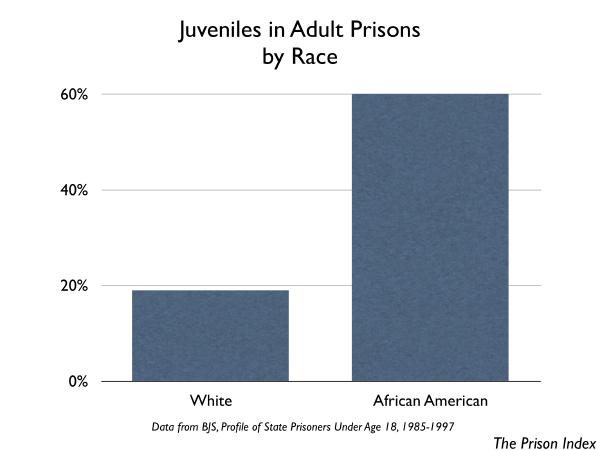
Juveniles in Adult Prisons

Black and Hispanic Juveniles in Adult Prisons

 The first blog posted was about the unequal sentencing between races and now this blog post is about the disparities between juveniles in adult prisons between races. In the 1900s, juvenile justice systems were created to stop the youth from becoming criminals. The Juvenile system tried to prevent youth from continuing to be involved in illegal activity by changing their mindsets so that they would become productive adults in society. Although the system was created to help the youth, it has over- represented minorities in the system. The juvenile system has created racial disparities. A system that was created to help improve the lives of the youth seems to have targeted minorities and has actually been harmful for the growth of the youth in these communities. These systems that have inequality are also extremely harmful because once the youth are sent to various places such as adult prisons they become labeled as second class citizens starting at a very young age.
For few races the juvenile system is an intervention for the youth, while many minorities experience the juvenile system as a way to label the youth as criminals at an early age. The youth that are sent to adult prisons due to the disparities, cause the youth to become actual criminals because they are placed in situations where they are living among real adult criminals that were sent to prison for serious crimes. Due to the fact that a lot of the youth are exposed to real criminals in adult prison, when they get out if they get out they have the tendency to become criminals because of their expose. The racial disparity in the juvenile system is that white youths are being sent to rehabs or detention centers while minority youths are sent to adult prisons with harsh sentences. 

The juvenile system has even gone as far to have disparities between the numbers of black and hispanic youths going straight to adult prisons.  Minority youths are disproportionately sent to adult courts and adult prisons more likely than their white counterparts. This is harmful to the community because the youth are viewed as criminal, which helps to support the stereotypes that there are more minorities committing crimes. These stereotypes are the reason why more minorities are stopped, frisked and arrested. Due to the disparities, minorities  youths are going to adult prisons and being sentenced as adults, while whites are getting let off with a lighter consequence and more opportunities to change their fate in society.


unaccompanied illegal immigrant minors

  Adult illegal immigrants have to face many problems in society. They need to find a shelter to live, a job to feed their family, and medical treatment for any health issues. However, for unaccompanied illegal immigrant minors, they have to deal with more issues. Recently, a large amount of children from Mexico and Central America tried to cross the border and came to the United States without documents. These children do not have parents or guardians accompanying them. Most of them are growing up on the street in their home countries. When they come to America, they have to solve many problems, and education is an important one. It's necessary for them to get opportunities to receive education. Educating new immigrants can also ensure the stability of society. However, in order to educate immigrant students, the government has to face financial problems, since the expenses for education come of the taxes and government subsides. Helping unaccompanied minor children will indirectly reduce the education expenses for local students whose families had paid more taxes. In addition, accepting the undocumented children to the public schools will also cause the problems about immunisation, academic levels, and also security problems, since schools barely know their students' background.Therefore, the policies from illegal immigrant minors are controversial and crucial for the country's development.


  Through the years, the population of children immigrants has increased largely, and most of the children come from Central America. From the statistics of Washington Times, an estimated 90,000 children may illegally cross American threshold by Sept.30, 2014. The population will keep increasing through the next few years. Therefore, the educational system is under the pressure to accept all these students. Depending on the recent policies, immigrant minors have the right to go to the public schools in America, so the states governments will need to afford the educational expense for these children. Most of the time, the government needs to pay an extra 30% of the money to educate non-English speaking students as compared to local english speaking students. Also, in order to accept this large amount of students, the government has to enlarge schools and recruit faculties, because the original classroom can hardly fit all these students. Schools also need more teachers to take care of these students. The health and immune systems need to pay attention to these immigrant children as well. Most of these unaccompanied children are orphans or lack of the supervision of guardians, so they may not receive the immunization as well as essential vaccines. If they come to school with certain viruses, it is pretty easy to spread the disease among students. Lack of the security check of the students will also bring schools trouble. In the Mother Jones, it talks about a story of a 17 years old boy Adrain who came across the border without guardians. He was instigated by a drug trafficker to carry some marijuana to sneak into America. Adrain was poor and did not have a family; he did not have any other choice. Therefore, he went across the border to become one of the unaccompanied immigrant minors. A lot of children are in the same situation as him. They were involved with the local drug dealing and the gangsters. These students' unwell behaviors may bring negative influences to the local public schools' students. Also, most of them did not systematically accept education, so it is really hard to find a proper academic level for them to fit in.

"Two young girls sit in their holding area where hundreds of mostly Central American immigrant children are being processed and held at the U.S. Customs and Border Protection Nogales Placement Center on June 18, 2014, in Nogales, Arizona." (centre for American progress, by Tom. K Wong)


  Even though accepting unaccompanied illegal immigrant children will bring inconvenience to the educational system, I believe that the country should still provide the opportunities to these children. Educational background is important for a person's development. If the government ignores the existence of these children and refuses to provide them educational opportunities, they may have to live on the street and raise themselves by stealing and begging.Since these children can not get education, they can hardly find any decent jobs, so later their future families' living conditions will stay in a vicious circle. They may cause violence to their neighbourhoods, so the crime rates will increase in the future years. Thus the conflicts among races will be more intensive. Fortunately, now the policies allow these children to stay in the countries and help them to find them sponsors or families. The public education is open to them as well. Even though helping these children will cause the burden of the government, non-profits organizations and agencies still keep working to provide these children better conditions.


Resources

http://www.motherjones.com/politics/2014/06/child-migrants-surge-unaccompanied-central-america

http://www.foxnews.com/politics/2014/09/02/cost-educating-new-class-illegal-immigrant-minors-estimated-at-over-760m/

http://www.washingtontimes.com/news/2014/aug/18/simmons-its-school-time-do-you-know-where-the-ille/?page=all

http://www.americanprogress.org/issues/immigration/news/2014/07/08/93370/statistical-analysis-shows-that-violence-not-deferred-action-is-behind-the-surge-of-unaccompanied-children-crossing-the-border/


Race and Gender Representation in the Media

The Michael Brown Case 

Race and gender have always posed social issues in American society. In todays media it is sometimes hard to identify both of these subjects as one meshed together within the media.
 Both gender and race are factored into the media today whether they are being presented together or separately. An example of the gender of a specific race being presented publicly in media usage would be the first silent film in 1915. This film portrayed a large African American male chasing after a Caucasian girl who posed as an innocent factor while the man was posed as a threatening figure. This film left a large imprint on society at the time as well as a specific view of African American males with such stature. This imprint became somewhat of a permanent view that individuals hold whether it is a conscience thought or not. 

Michael BrownAn example of a specific gender/race being represented inappropriately through media usage would be the Michael Brown case. I would say that this case is and example because it was initially put out into the public by media sources using a specific photo that was chosen by the Ferguson police department that posed him as a threatening individual (large African American male). 
The photo had the camera aimed up toward Brown, because of the positioning of this picture he looked intimidating which could have helped Wilsons(Police officer) claim of the event. Although civil rights charges are unlikely for Wilson because of the lack of evidence, many things still contradict his claims of the event such as why Wilson continued to fire at Brown as well as many witness accounts. The comparison of different accounts of this event as well as claims concerning the circumstances of Wilson shooting at Brown, relate to the claim of many that the case is bias because of Brown's race/gender. Dependent or not of whether this case had the results it did because of Browns race/gender, the way in which the media handled the publicity of the information is an example of how both subjects can be portrayed in the media.  

Sources:
 http://www.ijreview.com/2014/08/168698-eyewitness-recalls-important-detail-background-video-mins-ferguson-shooting/

 http://nypost.com/2014/10/18/ferguson-officer-says-he-was-pinned-in-car-feared-for-his-life-report/

 http://www.filmsite.org/1915-filmhistory.html

Resources should be for every student not just the few who have money


Within Academic Profiling. Latinos, Asian Americans, and the Achievement Gap,  Gilda Ochoa touches upon the lives of the students who attend Southern California High School. Ochoa specifies on the racism implemented and other obstacles that minority students face within their everyday lives at the high school. 
In Academic Profiling, Ochoa breaks up the students into groups from which the school categorizes them they are separated into different levels of teaching and an education based solely on ethnic backgrounds and their family’s finances. However in reality, for a better education and all-around personal structure, the education these categorized students receive should be based on their personal learning level and schooling history. Rebecca Ramos explains, “This system sorts, divides, and treats students disparately, fueling their separation and the feeling of being different and unequal” (Academic Profiling).
Ochoa talks of another ‘category’ created by Southern California High School which is one centered on race and bias, if you’re of Asian descent of course your smart, and if you’re a Latino/a, then of course your somewhat slower and need a little more preparation for life in education. Generally the Asian Americans, middle-class and upper-middle class students are placed into International Baccalaureate (IB), honors (H), and advanced placement courses.  However, the Latinas/os and working-class students are placed in non-honors courses, which are classified as college preparatory, otherwise known as the lower level classes that feel the racism and discrimination more heavily.  Ochoa recites that having these separations right at the beginning of high school creates the idea that “students are funneled into a system of inequality and competition where their peer groups are disparately and separately formed” (Academic Profiling). 
Even if students have high-test skills and learn faster or easier than others they are not always placed in the correct education level.  A Latino student talks about how she “could be smarter than them, and they wouldn’t even notice” (Academic Profiling, pg. 59) referring to the school board because of the major focus on Asian Americans.  Another instance was when one student who was placed in College prep classes because of her ethnicity, she decided to go up a few levels and learn at a level that she would benefit and prevail in.  Consequently the teacher did not welcome her in but ask why she was in her class and that she must have been lost.  Even when the students of this High School muster the courage to switch classes and have the means and skills to partake in them, they get isolated and receive poor treatment because of racism and academic profiling.
Heather Gautney agrees, in her article Invitation to a Dialogue: Unequal Schooling, believing that “education is the great opportunity equalizer” (Invitation). Gautney goes on to express what Ochoa similarly does within Academic Profiling that “the reality of our “make or break” education system is that race and social class largely determine the quality of one’s educational life, from pre-K to graduate school” (Invitation).  Both expressing that rather than education being a divider it could be a source of equality and impartiality amongst students.  Even in “global cities” public schools are still majorly segregated.  This is thought to have come about because of “housing and rapid rates of gentrification” and the “slow repeal of public policy focused on school integration in favor of privatization, accountability schemes and school choice” (Invitation). 
“School choice” even though it sounds like it is a choice does not really live up to its expectations.  For many Americans the choice is only prevalent when the household’s finances are up to par with being able to choose a school which they can afford besides the general public school that is offered.  In this case the “school choice” is only given to the students who are able to afford it.  Yes it is strategically and educationally correct for students to be able to have smaller classes and more resources for learning, Gautney conveys, but it should be that way for all students not just the few who have money.  She elucidates on the fact “education is a microcosm of a host of problems linked to social inequality. In the United States, “public” has come to signify the bottom of the barrel” (Invitation).  (I’d provide a quick sentence or two in agreement to the quote you just put, more stable in the sense of format for this piece.)
Ochoa describes and depicts on the achievement gap, “a common frame in today’s discussion about education that there is “an achievement gap” based on race/ethnicity” (Academic Profiling). Gautney and Ochoa explore why and how unequal schooling affects the lives of too many people and why there is still an achievement gap in the education provided today. In my opinion, the standards and expectations are explicitly laid out for these students and even the surrounding public to see. However, the effect of Academic Profiling has paid a large toll on the performance by these students (the minorities). They are the ones who do not have any expectations to live up to, unlike the majority, and most of these students will not even try to pass by them or create further educational goals than what is the norm for his/her culture.   


·      Gautney, Heather. "Invitation to a Dialogue: Unequal Schooling." The New York Times. The New York Times, 21 Apr. 2014. Web. 16 Oct. 2014. <http://www.nytimes.com/2014/04/22/opinion/invitation-to-a-dialogue-unequal-schooling.html?module=Search&mabReward=relbias%3Aw%2C%7B%222%22%3A%22RI%3A13%22%7D&_r=0>.

·      Ochoa, Gilda L. 1965- Author. Academic Profiling. Latinos, Asian Americans, and the Achievement Gap. Minneapolis, MN: U of Minnesota, 2013. Print.


Sunday, October 19, 2014

Coca-Cola's Super Bowl Ad

During the 2014 Super Bowl, Coca-Cola released an ad featuring people from all over the world singing "America the Beautiful" in their native language. On the surface, the ad seemed innocent enough, perhaps meant to symbolize our nations all trying to get along. However, after the ad was aired, it quickly stirred up some controversy.

First of all, people complained about people singing "America the Beautiful" in languages that weren't English, saying that it felt like it made us, as Americans, not feel proud enough to just sing it in English, so we just get non English speaking people to sing it. Others felt like Coca-Cola was sending a mixed message. Fox News Radio host Todd Starnes commented "So was Coca-Cola saying America is beautiful because new immigrants don't learn to speak English?" Others felt the ad was trying to say America is superior to other nations by having people from those nations sing about it.

Another criticism of the ad revolved around the use of a gay couple in it. At the time, Coca-Cola-Cola was also a sponsor of the 2014 Winter Olympics in Sochi, Russia, a place where the government was strictly anti-LGBT. People felt that although the ad was supposed to show support for gay rights, if they ran it in Russia- and during the Olympics, no less, they would get in a lot of trouble.

Personally, I think everyone's criticisms about the ad were just unnecessary. It was apparent that Coca-Cola was just trying to show all our nations getting along and coming together as one. Sure, maybe "America the Beautiful" wasn't the best song choice for an ad like that, but at least it seemed to fit the tone of the ad. Also, I have nothing against gay people, and if Coca-Cola wanted to show them in the ad, then they have every right to, even if they were sponsoring the Olympics is a place that was against it. It seems like the people complaining about the ad took it too seriously and seem to think we can't get along, which of course was the opposite of what the ad was trying to show. If they can't react that well to people in other countries being in a commercial where they sing an American song, then who knows how they'd react if they saw it happen in real life?

http://www.latimes.com/entertainment/tv/showtracker/la-et-st-coca-cola-super-bowl-ad-stirs-controversy-20140203-story.html
http://www.nydailynews.com/entertainment/tv-movies/coca-cola-super-bowl-ad-angers-conservatives-article-1.1600849

Saturday, October 18, 2014

Controversial Cheerios Commercial, post #2


This Cheerios commercial from 2013, showing an interracial family, stirred up wild controversy. The commercial shows a young biracial girl asking her mother if Cheerios are good for your heart, and the mother answers yes. As a result the young girl innocently piles Cheerios on her father’s chest while he’s napping.
The comment section on the video got so filled with racial slurs that they actually had to disable them because the language was not family friendly. The Facebook page featured comments calling the commercial “disgusting” or saying that it makes them “want to vomit.” Some even expressed shock “that a black father would stay with his family.”

People demanded Cheerios to cancel the commercial but the company refused and even produced a second to show during The 2013 Super Bowl. Some did respond positively to the commercial, thanking them for keeping the commercial online despite the negative responses. Camille Gibson, Cheerios vice president of marketing states, “At Cheerios, we know there are many kinds of families and we celebrate them all.”
Some believe the issue was the normality of the family. Perhaps seeing a mixed race family too similar to their own family and not something “strange” or “odd” created a sort of panic. However, it’s more normal than people seem to think with racial mixes becoming more and more frequent. The 2010 census showed a major increase in individuals that consider themselves to be mixed race or multi-racial. Since 2000 this has increased by almost 50 percent.
These sorts of negative opinions could easily be from rural, isolated areas in the United States who are surrounded by the same race. Marcia Alesan Dawkins, a professor at the University of Southern California, believes a lot of upset was due to not only the fact that this was a mixed race family, but that for some it’s more difficult to see a white woman with a black man due to the horrific ways that black men were punished for “praying on innocent white women,” and often were beaten or lynched. She believes there is fear in some or mixed race families because when white is not the majority there will be a loss of control and power as society would became more equal.
Jenifer Bratter, professor of sociology at Rice University, observes the casting and way that the family could have been set up is interesting. If both parents were presented as African American there would probably be no major issues with the commercial. This speaks to the fact that the multi racial child featured in the commercial and many children like her in other forms of media are often multiracial. Many African Americans are mixed race, multigenerational but are rarely perceived that way.
This commercial is an example how interconnected our world is. Now that the nation can see the way the rest of the country is progressing and living many are forced to face their prejudices just by turning on the television. We know that interracial families are nothing new and have been a part of our society, but now images of American life throughout the nation are being depicted in the media, social networking, and on television, and many now are being faced with the reality that interracial families are a regular and growing part of our society.


 Sources:

http://www.huffingtonpost.com/2013/05/31/cheerios-commercial-racist-backlash_n_3363507.html

http://www.usmagazine.com/entertainment/news/cheerios-super-bowl-ad-brings-back-interracial-family-from-controversial-2013-commercial-2014291

http://www.today.com/news/cheerios-ad-mixed-race-family-draws-racist-responses-6C10169988

http://www.mprnews.org/story/2013/06/11/daily-circuit-cheerios-multiracial-family