Showing posts with label media. Show all posts

Monday, November 3, 2014

Is Black History Month still relevant?

Why does black history get its own month? Isn't that an example of racism? 

(Well...)
To those questions, I would say no. It is not a representation of racism because the goal of Black History Month is to celebrate the achievements of African Americans for their central roles in U.S. history. If the purpose and result of Black History Month is calling African Americans superior to other races then yes, there is an argument of racism there. However, Black History Month is more about raising awareness for the accomplishments of individuals that are often overlooked in history classes. Answering the presumptuous man in the meme above, the reason why we don't have a white history month specifically is because the achievements and contributions of whites are regularly spoken about and taught in classrooms and everyday lives. There is no need to further highlight them by dedicating a full month to white achievements, we as a society already do that all year long. 
(Do you recognize these prominent figures? Did you learn about them throughout your history classes or just during Black History Month?)
Black History Month was started by historian Carter G. Woodson and other prominent African Americans and was originally known as "Negro History Week." Their hope is that one day the week would be eliminated because black history is American history.  The group now known as the Association for the Study of African American Life and History (ASALH) sponsored the first national Negro History Week in 1926 on the second week of February, which coincide with the birthdays of Frederick Douglass and Abraham Lincoln. In response to the Civil Rights Movement and growing black identity, by the late 1960s, Negro History Week expanded into Black History Month. Since 1976, every U.S. president has officially named February as Black History Month. Other countries, including Canada and the United Kingdom have also designated the celebration of black history in a month. 

Arguments FOR Black History Month
  • This month can be significant in highlighting the challenges African Americans faced in the past and in modern society.
  • Helps people understand the privileges gained by past figures who fought for what they believed in.
  • Gives an opportunity to highlight the best of African American culture rather than allow stereotypes (poverty, incarceration rates, drop outs) to persist.
  • Since most people are more knowledgeable about "white" history, if there isn't an opportunity to cultivate black history into people within this month, when will people learn about their past?
  • Since black history has yet to be incorporated fully into the education curriculum, the original goal of it persists and thus it must remain as an awareness month. 
  • There are many months celebrating different cultures and ideas such as Breast Cancer Month, National Hispanic Heritage Month, and Women’s History Month.
Arguments AGAINST Black History Month
  • Black history is American history, if it is taught like it should be then there is no need to have this month.
  • Even though students learn about the achievements of prominent African Americans, they learn little about the background historical context these figures lived in. Not only does this serve little to tie the achievements into time periods, it also trivializes the fact that these people lived during time periods where racism was still verbally and visibly prominent.
  • It is racist to designate one month to one race of people when there are plenty of other  races that are not being represented, this further fuels racial inequality.
  • Since black history is singled out for one month, the teachings of it is not focused on incorporating it into the curriculum. If Black History Month is taken away, then black history will be taught along the appropriate time line like it should be. 
  • Even though there are different months celebrating certain groups and cultures, should history be broken into pieces and delivered to students with emphasis in certain times rather than as a whole.
  • History is already taught in sectionalized format and not in a linear, time-oriented way that it is already difficult for students to really comprehend that there are many important points in history that overlap at the same time period. If black history is only being emphasized in one month and with only certain aspects highlighted, students will not be able to fully associate it as a part of American history. 

(Yes? No?)

Writer Raina Kelly asks an interesting question and provides a statement that sums up an interesting idea that goes past the argument of Black History Month, but focuses on the racial disparities and disadvantages present in modern society:

 "Rather than wasting time bemoaning the existence of Black History Month, why don't we use it to proselytize for the issues that need to be more fully covered and understood the other 337 days of the year-such as failing inner-city public schools, institutionalized poverty, health-care disparities, and job discrimination? 
Black History Month is a measure of how fully or accurately our story is being told and 
a reminder of the work yet to be done." 


Resources

Davids, Sherelle. "Why Black History Month Needs to Be Celebrated."Equality and Diversity at LSE. N.p., 13 Oct. 2011. Web. 03 Nov. 2014. <http://blogs.lse.ac.uk/diversity/2011/10/why-black-history-month-needs-to-be-celebrated/>.

History.com Staff. "Black History Month." History.com. A&E Television Networks, 2010. Web. 02 Nov. 2014. <http://www.history.com/topics/black-history/black-history-month>.

Nittle, Nadra K. "Do We Still Need a Black History Month? Arguments for and Against." About. N.p., n.d. Web. 03 Nov. 2014. <http://racerelations.about.com/od/historyofracerelations/a/IsBlackHistoryMonthRelevant.htm>.

Tuesday, October 21, 2014

Using Comedy to Address Racism

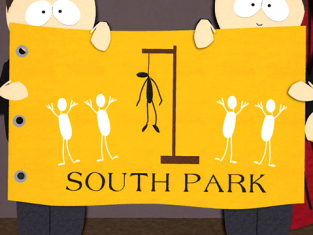
       One of my favorite forms of comedy is satire.  The definition of satire is: the use of humor, irony, exaggeration, or ridicule to expose and criticize people's stupidity or vices, particularly in the context of contemporary politics and other topical issues.  One of my favorite source of satirical comedy is the show South Park.  I know countless people that absolutely HATE the show.  They think it is the most inappropriate, most vile, most ignorant thing on TV.  Unfortunately, these people only look at the surface of the show and don't even try looking any deeper.  Under its "brain dead" and "stupid humor" exterior is a serious satirical interior.

       While most of the episodes touch on important modern day topics, there is one specific episode (Chef Goes Nanners S04E07) that I feel is most appropriate for our class:LINK TO EPISODE

                                                (screenshot from the mentioned episode)

       This episode is about whether or not the towns flag should be changed due to its racist appearance.  One of the black members of the town, Chef, is extremely offended by the flag and demands that it is changed.  Another member of the town, Jimbo, strongly believes that the flag is a major part of the towns history and should therefore not be changed.  Because it is such a touchy subject and they don't want to look bad, the town chooses to let the kids at the local school decide whether or not the flag should be changed.  The kids are told that they are to have a debate about the topic and to pick the side they want to argue for.  When two of the main characters, Stan and Kyle, choose to be on the side that supports the flag, Chef ridicules them and they are seen as racist.  When the debate starts, the side arguing that the flag should change makes their statement.  They argue that, "Often times it is prudent to change history.  As times change we hope to grow and as we grow our rules must change, it is a natural part of evolution".  When it is the other side's turn to argue against the changing of the flag, they argue that, "the fly shouldn't offend anyone because killing has been around since the beginning of time.  All animals kill and the animals that don't kill are stupid...so people should not be so upset about killing".  Chef immediately criticizes them for missing the point of the argument.  The kids explain that they didn't pay attention to the color of the peoples' skin because they didn't think it was important.  Chef then realizes that the kids didn't see the flag as racist because they didn't see it as four white people hanging a black person, but as five people.  The episode ends with both sides making a compromise to keep the flag but change the color of the peoples' skin.
(the changed flag)

       This episode does a great job addressing certain issues with racism.  One thing it addresses is how racism can be taught, mainly by adults to children.  When the kids explain to chef how they didn't pay attention to the color of the peoples' skin, he tells them that the flag is racist and they respond in a way that makes it seem as though they were wrong for thinking that it wasn't racist and that Chef was telling them the right way to look at it.  Another issue this episode addresses is the general public's fear of talking about racism.  In the episode, when any of the general public is asked about their opinion on the debate, they are always indecisive and afraid to offend either side.


Friday, October 17, 2014

Jesus Wasn't White: biblical epics and whitewashing


Egyptian Mayonaise: (L to R) Christian Bale, John Tuturro, Sigourney Weaver, and Joel Edgerton in Exodus: Gods and Kings

   With “Noah” and “Son of God” released earlier this year and “Exodus: Gods and Kings” scheduled to debut in December, 2014 has been a revitalizing year for the stagnant genre of “Biblical Blockbuster”. Although heavily dramatized these films harken back to a period of cinematic Golden Age epics that are few and far between in today’s market. Similar to this genre throwback, however, they are tangible reminders that since the Golden Age Hollywood has continued the ugly practices of whitewashing and people of color (POC) erasure.

   First let’s examine the historical regions these films are supposed to be set in. While we can’t say for sure where exactly Noah’s Ark would have set sail, we know the 40 day journey ended at Mount Ararat, a mountain in modern day Turkey, so we can safely assume he began somewhere within that general region. Since it is a biographical film about Jesus Christ, we know that Son of God is set in Jerusalem. Finally Exodus we know to be set in the Nile Delta region of Egypt. All three of these films are set in regions populated by historically provable populations of POC. Despite this fact the lead roles in all three movies are filled by white actors and the only POC, absent totally in Noah, are background servants, criminals, villains, and even a demon.

   Some of these films have tried to justify their whitewashing in response to criticism. Ari Handel, co-writer of Noah, responded by saying “From the beginning, we were concerned about casting, the issue of race. What we realized is that this story is functioning at the level of myth, and as a mythical story, the race of the individuals doesn’t matter. They’re supposed to be stand-ins for all people”. This quote is telling of one of the key concepts at play here, White Invisibility. As we’ve discussed in class when a racial group is in an advantageous position they do not have to reflect on the impact their race has on their life on a regular basis. As a result they come to think of themselves as race-less, the default, and as illustrated in the above quote, a universal stand-in. Building further on this misassumption characters are only given a non-white identity when it is used as implicative shorthand, as is seen with Exodus’s association between blackness and inferiority, or Son of God’s connection of blackness and villainy. 

Israeli Wonderbread: Diogo Morgado as Jesus Christ in Son of God

   While the institutionalized discrimination POC actors face as a result of these beliefs is a serious issue, even more damaging is the internalized racism it promotes in its audiences. The underlying themes, that positive religious figures are inherently white and that POC have no place in a religion they may well practice, is a very demoralizing one. As Anthea Butler, an associate professor of religious studies at the University of Pennsylvania, puts it “It’s a world where only white people get saved…This doesn’t look like the world that God created”. Hard data also makes the assertion that the primary potential audience of a religious film would be POC. According to a 2007 Pew Center survey 79% of African American respondents said religion is very important in their lives, and with a breakdown based on faith roughly 85.5% identified as some form of Christian. This lies well above the 56% of the US adult population when examined across racial lines. If the current trend of religious movies continues then hopefully, with a lot of critical analysis, awareness in potential audience members, and a healthy dose of film boycotting, the film industry will start to change their tune on POC representation.

Sources cited:
Scheller, Christine. "Stewardship of Creation: An Interview with "Noah" Screenwriter, Ari Handel." The High Calling. The High Calling, 11 Apr. 2014. Web. 17 Oct. 2014.
"A Religious Portrait of African-Americans." Pew Research Centers Religion Public Life Project RSS. Pew Research Centers, 30 Jan. 2009. Web. 17 Oct. 2014.
Lee, Marissa. "Modern Hollywood and the Ancient East." Racebending.com. 31 Mar. 2014. Web. 17 Oct. 2014.

Wednesday, September 24, 2014

Race and Ethnicity in Comedy

                                                           Race and Ethnicity in Comedy


       Comedy has been around since the beginning of time and since then it has been used to make fun of endless issues.  Although some comedians are more to the point than others, they all bring up serious topics and bash them to hell.  Unfortunately, the way some of these comedians make fun of certain topics, such as race and ethnicity, causes some uproar within certain communities of people.  While some people see comedy as a good way to get rid of the maliciousness of racism, others feel that it enforces racism and causes more problems.
       According to sociology major, Aaryn Green from the University of Cincinnati, "as made evident by the success of comedians such as Chris Rock and Dave Chappelle, standup comedy challenges acceptable racial discourse; placing race in the forefront".  Green believes that this kind of racial comedy "creates an environment where race can be spoken about directly, and often times harshly(Green, Aaryn).

Dave Chappelle's stand-up (WARNING: THERE ARE A LOT OF RACIAL SLURS)

Chris Rock stand-up (WARNING: THERE ARE A LOT OF RACIAL SLURS)                                


       For the most part there are two general views of how racism in comedy affects race and ethnicity.  Some believe that racism in comedy is giving people an excuse to be racist and allowing them to think and act in racist ways because these stand-up comedians make people laugh by doing so.  Others believe that racism in comedy eliminates racism by taking away its malicious intent and by showing how simpleminded and ridiculous racism is.  What is interesting is how the issue of racism in comedy flies over the heads of so many people, yet those same people will argue about racism in other contexts.  Many people will laugh at a joke about racism told by their favorite comedian and then turn around and yell at someone else for saying the same joke because they are being racist (see video below).


       In an article by Raul Perez from the University of California, Raul states that many people see comedy as a sort of catalyst for modern racism.  He writes, "Scholars have noted the decline in overt racist discourse in public in the post-civil rights era and contend that the ideology of overt Jim Crow racism has been replaced"(Perez, Raul).  It is argued that racist comedy is the modern form of racism promotes racist ideology.

       In conclusion, People have always learned to laugh at their flaws and mistakes.  That's what comedy is.  Hopefully someday everyone will be able to laugh at what was once the overwhelming issue of racism.  Hopefully sometime soon we will be a secure enough society where we can all make fun of racism because of its obvious irrationality instead of worrying about it's overall implications.


Race and Social Media 1

Social Media: We all know that social media has become a prominent feature in our society within the last decade or two. It has allowed people of different backgrounds to communicate, interact, spread and share information with each other, and have access to things they might not have known about before. What people consider to be “social media” may vary from person to person. Just to have a brief overview on what social media can mean, some people have a more narrow view on what social media is. They may only see it as a person to person form of interaction, such as sites like Facebook. However, broader definitions can include sites not only like Facebook and Twitter but also sites that encourage community interaction and collaborative opportunities as well as YouTube, online games, and virtual worlds. One inclusive definition is: “websites and applications that enable users to create and share content or to participate in social networking.”(1).Even before these growing numbers, people of color found ways to interact with social media and to have a voice in online communities.   

 Brief History of Race in Social Media: Through the years, social media has also become a powerful tool in terms of allowing people of different racial backgrounds to be heard and have access to the same information. As the internet has changed, “the history might then chart how ‘smart phones’ have changed the demographics of internet access, noting that, in the United states a least, 'over the last decade, the internet population has come to much more closely resemble the racial composition of the population as a whole'"(2). People of color have especially been able to find a strong voice through Twitter and similar platforms. 
Just looking at this past summer, the events of Ferguson Missouri were largely covered (and are still being covered) on Twitter from the black residents of the community, sometimes giving people more information than news sources and journalists were able to provide. In fact, people of color’s use of the internet and social networking websites has grown so much over the years that now “70% of African Americans and English-speaking Latinos reported using social networks (higher than Whites at 60 present)”(3). Even before these growing numbers, people of color found ways to interact with social media and to have a voice in online communities.  

(an example of social media users on a specific website, in this case, Twitter.) 


How It Relates: As stated before, social media can be a powerful tool that lets people of color have a strong voice. It can greatly add to the conversations about race and ethnicity and impact people’s awareness of related issues while also being a way to hinder the conversations about race. For anyone who has spent time in the YouTube comment section or Reddit subforums, you know that race if often used as a way to insult or “troll” people. Lisa Nakamura states that "Racist 'trolling' is an attempt to instrumentalize feeling, to engineer abjection, to find a way to gain the attention economy," she said. To call Internet racism "trolling" is to dismiss and minimize hate speech”(4). Also, while social media can give a voice to people of color, it can also give the same thing to anti-Semites and white supremacists. Also, if black people (or PoC in general) are not on the same social networking and social media sites as whites, it is easy for them to be overlooked in the job market and to gain access to working opportunities.(5) That being said, social media can also offer safes spaces for many marginalized groups of people away from the larger population of the internet along with helping to inform masses of people at once.

Sources:
(2)(3) "Routledge Handbook of Social Media." Google Books. Ed. Jeremy Hunsinger and Theresa Senft. Routledge, 2013, n.d. Web. 23 Sept. 2014
(4)"Race and Social Media: How to Push the Conversation Forward."Mashable. N.p., n.d. Web. 23 Sept. 2014.
(5)Ditomaso, Nancy. "How Social Networks Drive Black Unemployment."Opinionator How Social Networks Drive Black Unemployment Comments. N.p., May-June 2013. Web. 24 Sept. 2014.
Image: Www.pewresearch.org. "The Demographics of Social Media Users — 2012." Comp. Maeve Duggan and Joanna Brenner. The Demographics of Social Media Users — 2012 (n.d.): n. pag.Http://www.lateledipenelope.it. Pew Research Center. Web. 23 Sept. 2014.


Wednesday, September 3, 2014

Posts for the class begin!

You will notice that labels have now been created for the posts that you will construct. You MUST label all posts--please select from the given labels rather than creating your own.